Your How to make a form for concrete stairs images are ready in this website. How to make a form for concrete stairs are a topic that is being searched for and liked by netizens today. You can Get the How to make a form for concrete stairs files here. Download all free photos.
If you’re searching for how to make a form for concrete stairs images information connected with to the how to make a form for concrete stairs topic, you have come to the right site. Our site frequently provides you with hints for seeking the highest quality video and picture content, please kindly surf and find more informative video content and graphics that fit your interests.
How To Make A Form For Concrete Stairs. This is the form. To create the bullnose a form liner with the bullnoses molded shape is placed into the concrete form. Typically come in 4- and 8-foot lengths and heights from 2 inches for countertop and wall cap edges to 75 inches for steps. Construction of the wooden form that would hold my concrete was a simple process of marrying two pieces of plywood with five pieces of said planking lumber for the steps.
 Concrete Porch Steps Concrete Floor Stain Concrete Flooring Landscaping On A Hill Sloped Backyard Garden Stairs From pinterest.com
How long do you leave forms on concrete steps. This looseness is actually a good thing because it provides a little wiggle room to make minor adjustments as you go. Space your stringers to be approximately the planned width of your stairs apart. Build a frame with the boards that will fit snugly around the graveled area. 2 steps each step will have 45in rise. Dont worry if the stakes are a little sloppy at first.
Build the forms.
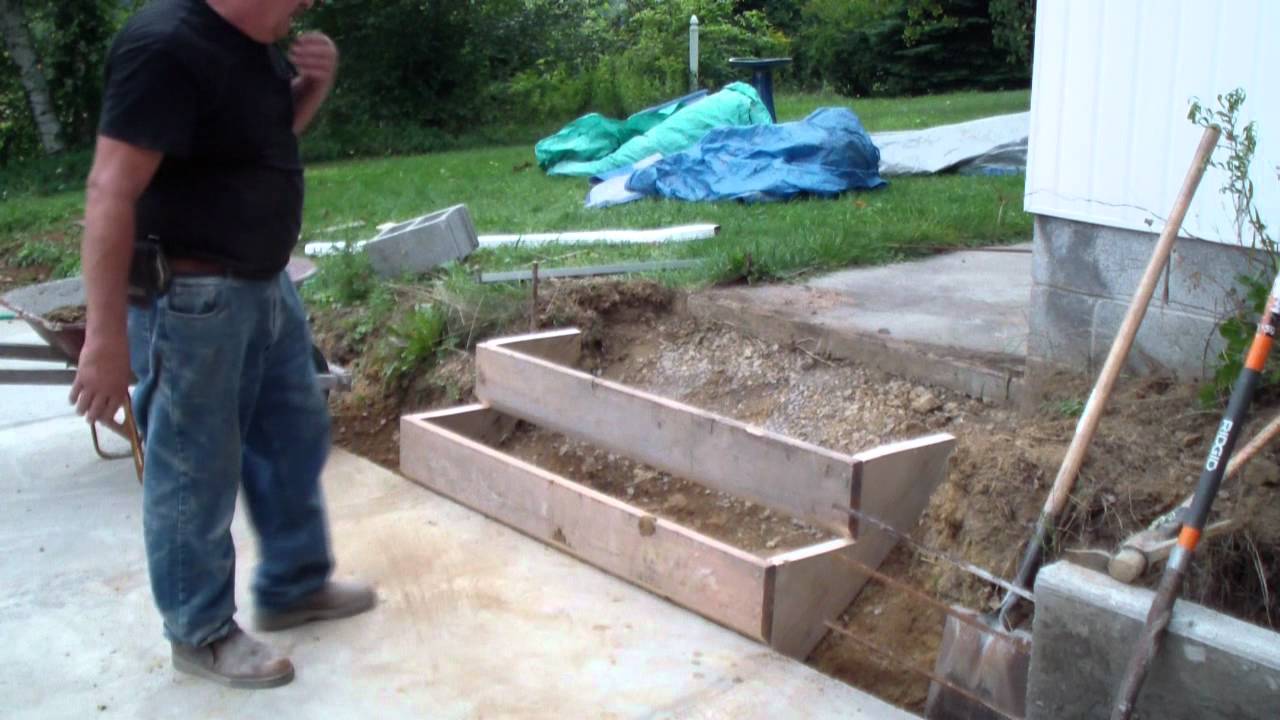
Measure the length and width of the steps and cut one 2-by-6 inch-length for each measurement for each step. From 112 for 28 linear feet. The concrete steps in this project were butting up against a wall made of concrete bricks on one side so we needed to build a form sidewall only down one side of the steps. Its important to vibrate the face of the concrete forms to remove any honeycombs and voids from the concrete surface. If your stairs form a right. The forms or molding that holds the concrete in place until it dries should be left alone for at least two days to ensure that the concrete is completely dry.
 Source: pinterest.com
Typically come in 4- and 8-foot lengths and heights from 2 inches for countertop and wall cap edges to 75 inches for steps. Typically come in 4- and 8-foot lengths and heights from 2 inches for countertop and wall cap edges to 75 inches for steps. Hi I am planning to build semi-circular concrete steps. How long do you leave forms on concrete steps. Wooden riser boards are installed between the two sides to form the concrete into stair steps during the pour.
 Source: pinterest.com
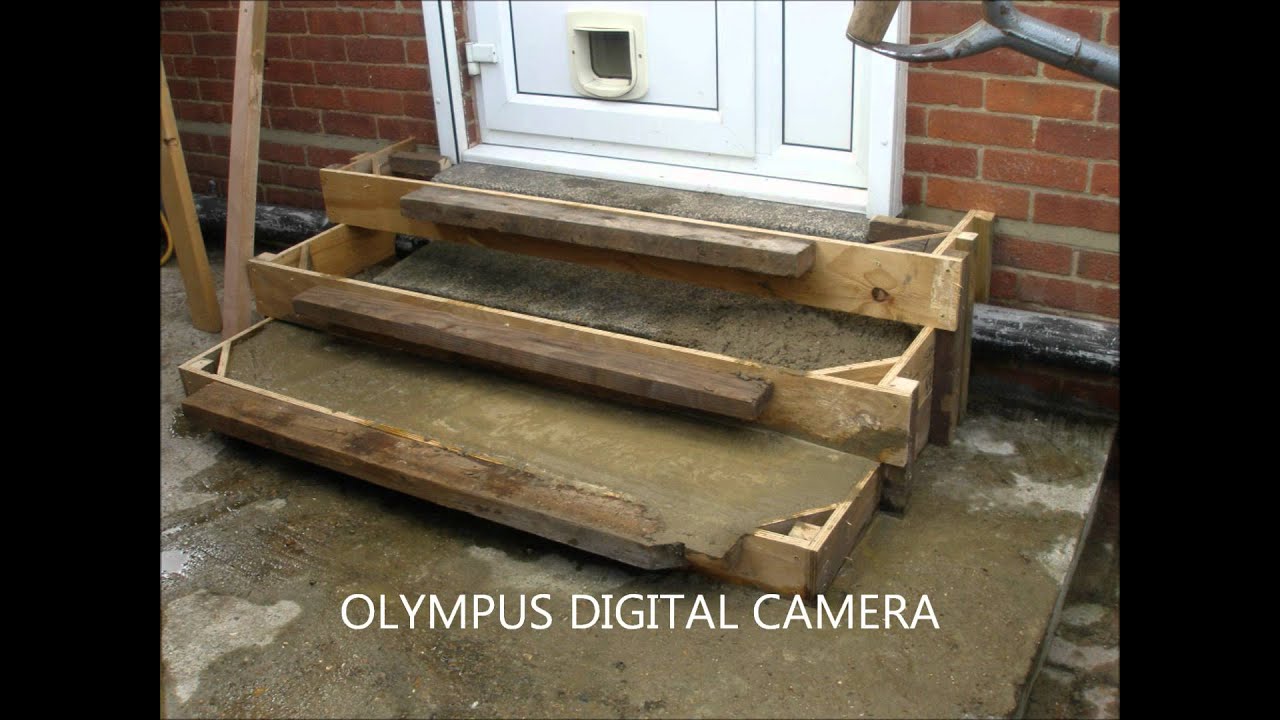
If your stairs form a right. Plywood for the side form boards. Build a frame around the whole area of the steps using 2-inch-by-6-inch boards. For each concrete step cut a piece of 2x lumber to the width of the stairs and rip it to the height of the unit rise if necessary. Vibrating the forms brings the concrete paste to the surface to fill in any holes.
 Source: pinterest.com
These forms are used most often to create a profiled edge on concrete steps. Wooden riser boards are installed between the two sides to form the concrete into stair steps during the pour. The side supports on either side of a stair is known as the stringers. Rid your steps of sharp edges using bullnose form liners. Construction of the wooden form that would hold my concrete was a simple process of marrying two pieces of plywood with five pieces of said planking lumber for the steps.
 Source: pinterest.com
These forms are used most often to create a profiled edge on concrete steps. Dig a trench to secure the bottom of the plywood. Secure the sides with 24 stakes. Plywood for the side form boards. Typically come in 4- and 8-foot lengths and heights from 2 inches for countertop and wall cap edges to 75 inches for steps.
Source: pinterest.com
It is important to pay attention to the measurements of these as they will be used when creating your concrete forms. Dig a trench to secure the bottom of the plywood. Common profiles include bullnose round or fancy edge profiles. Use long screws and nails to lock together the wooden formwork and make sure there are no gaps between the boards. If the forms are removed too soon the concrete can begin to sag crack and collapse especially if conditions like temperature affected its strength.
 Source: pinterest.com
Remove forms the day of pour and customize. If your stairs form a right. Vibrate the edge of your forms. Screw 2 in 4 in 51 cm 102 cm planks into the form and fasten them to the ground with wooden stakes to prevent. I searched internet and books for an example how to build the forms for semi-circular steps.
 Source: pinterest.com
Build the forms. To create the bullnose a form liner with the bullnoses molded shape is placed into the concrete form. Construction of the wooden form that would hold my concrete was a simple process of marrying two pieces of plywood with five pieces of said planking lumber for the steps. Its important to vibrate the face of the concrete forms to remove any honeycombs and voids from the concrete surface. If the forms are removed too soon the concrete can begin to sag crack and collapse especially if conditions like temperature affected its strength.
 Source: pinterest.com
Screw 2 in 4 in 51 cm 102 cm planks into the form and fasten them to the ground with wooden stakes to prevent. The concrete steps in this project were butting up against a wall made of concrete bricks on one side so we needed to build a form sidewall only down one side of the steps. Once the form is attached the concrete poured into the form cures to the shape of the installed liner mold. To create the bullnose a form liner with the bullnoses molded shape is placed into the concrete form. First I cut the two pieces of 34 plywood to the design of the steps and securely screwed the planking wood also 34 thick to the FRONT of what will be the stairs.
 Source: pinterest.com
This is the form. Bevel the lower edge of each riser except the bottom one to make it easier to float the tread when you pour the steps. Assemble your concrete form. First I cut the two pieces of 34 plywood to the design of the steps and securely screwed the planking wood also 34 thick to the FRONT of what will be the stairs. The forms or molding that holds the concrete in place until it dries should be left alone for at least two days to ensure that the concrete is completely dry.
 Source: pinterest.com
Measure the length and width of the steps and cut one 2-by-6 inch-length for each measurement for each step. Construction of the wooden form that would hold my concrete was a simple process of marrying two pieces of plywood with five pieces of said planking lumber for the steps. To create the bullnose a form liner with the bullnoses molded shape is placed into the concrete form. Common profiles include bullnose round or fancy edge profiles. Then you can lay the riser form boards.
 Source: br.pinterest.com
For each concrete step cut a piece of 2x lumber to the width of the stairs and rip it to the height of the unit rise if necessary. Once the form is attached the concrete poured into the form cures to the shape of the installed liner mold. Use long screws and nails to lock together the wooden formwork and make sure there are no gaps between the boards. Dig a trench to secure the bottom of the plywood. How long do you leave forms on concrete steps.
 Source: pinterest.com
It is important to pay attention to the measurements of these as they will be used when creating your concrete forms. These riser boards form the front of each step. Vibrate the edge of your forms. If your stairs form a right. Vibrating the forms brings the concrete paste to the surface to fill in any holes.
 Source: pinterest.com
To create the bullnose a form liner with the bullnoses molded shape is placed into the concrete form. Work with patience and make sure the wooden form is level and plumb otherwise the concrete stairs would look misaligned. The concrete steps in this project were butting up against a wall made of concrete bricks on one side so we needed to build a form sidewall only down one side of the steps. Vibrating the forms brings the concrete paste to the surface to fill in any holes. Remove forms the day of pour and customize.
 Source: pinterest.com
To create the bullnose a form liner with the bullnoses molded shape is placed into the concrete form. First I cut the two pieces of 34 plywood to the design of the steps and securely screwed the planking wood also 34 thick to the FRONT of what will be the stairs. I have 2 questions. This is the form. Plywood for the side form boards.
 Source: pinterest.com
Vibrate the edge of your forms. 2 steps each step will have 45in rise. Top step has 2ft radius the bottom - 37 in. Vibrate the edge of your forms. Assemble your concrete form.
This site is an open community for users to share their favorite wallpapers on the internet, all images or pictures in this website are for personal wallpaper use only, it is stricly prohibited to use this wallpaper for commercial purposes, if you are the author and find this image is shared without your permission, please kindly raise a DMCA report to Us.
If you find this site value, please support us by sharing this posts to your preference social media accounts like Facebook, Instagram and so on or you can also bookmark this blog page with the title how to make a form for concrete stairs by using Ctrl + D for devices a laptop with a Windows operating system or Command + D for laptops with an Apple operating system. If you use a smartphone, you can also use the drawer menu of the browser you are using. Whether it’s a Windows, Mac, iOS or Android operating system, you will still be able to bookmark this website.


