Your Concrete slab flatness tolerances images are available in this site. Concrete slab flatness tolerances are a topic that is being searched for and liked by netizens today. You can Find and Download the Concrete slab flatness tolerances files here. Download all free photos.
If you’re searching for concrete slab flatness tolerances pictures information linked to the concrete slab flatness tolerances topic, you have visit the ideal site. Our site frequently gives you hints for seeking the highest quality video and image content, please kindly hunt and find more enlightening video content and graphics that match your interests.
Concrete Slab Flatness Tolerances. The top surface of slabs or pavements. Material tolerances are in Section 2 including the location tolerance for reinforcing bars which varies depending on the thickness of the concrete member. While this appears more stringent than the tile. There are actually three F-numbers that are used for concrete floors.
 Concrete Floors Surface Regularity And Flatness Alphaplan From alphaplan-group.com
Architect to a more stringent tolerance. The tolerances can also be broken out further by program type. ACI 117 sets minimum sampling requirements to help ensure a statistically representative set of. The flatness of the surface and variation from the designed elevation levelness. The top surface of slabs or pavements. F-numbers were developed in the 1980s to provide a systematic quantitative way to indicate the flatness and levelness of a concrete floor.
Establishing tolerances for concrete construction by specification writers and ACI committees writing standards.
5 it is not possible to construct concrete floor. That the general contractor provide a concrete slab troweled smooth and flat to a tolerance of 18 in a 10 radius for all gymnasium floors. F-Number tolerances for various concrete floor slab construction qualities. The toler-ance for an architectural concrete wall may be small compared with the surface of a dam to be viewed from a considerable distance. Fmin tolerances vary with the actual lift truck manufacturers performance data. Single trowel machines.
 Source: dcocf.com
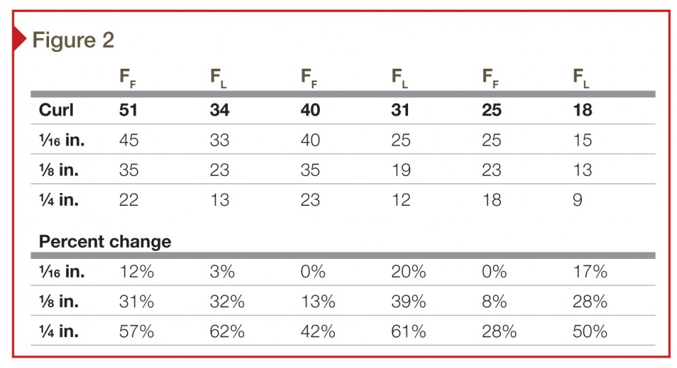
FF20FLna Hand screeded to slab thickness. There are actually three F-numbers that are used for concrete floors. F F and F L tolerances shall be tested in. A surface that does not require formwork to provide either shape or finish to the surface eg. While this appears more stringent than the tile.
 Source: industrialconcreteflooring.co.uk
Common tolerances may result in ambiguous are not addressed by ACI 117. That is it takes teamwork. Flatness is a function both of the elevational difference and of the rate at which elevational differences change across a floor. The toler-ance for an architectural concrete wall may be small compared with the surface of a dam to be viewed from a considerable distance. Were 18 inch or 14 inch in 10 requirements.
 Source: smdltd.co.uk
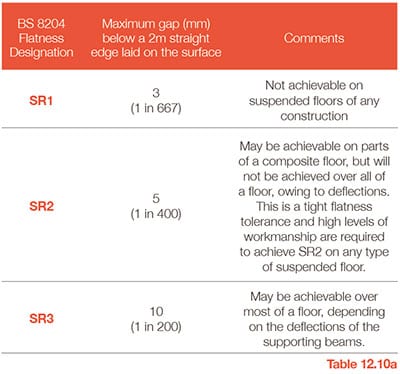
There are actually three F-numbers that are used for concrete floors. These distances are not easily definable but traditionally flatness has been controlled over a distance of 300 mm and levelness over a distance of 3 m as well as to a buildings general datum. How to Specify Concrete Floor Flatness. Flatness and Levelness Tolerances. Common tolerances were 18 inch or 14 inch in 10 feet.
 Source: pinterest.com
The tolerance required for ap-pearance depends to a large extent upon the distance from which the structure will be viewed. All points should be within - 15mm from planned level. Architect to a more stringent tolerance. Concrete Floor Slab Flatness and Levelness Traditionally allowable tolerances of concrete floor slabs were determined by checking the slab surface with a 10 foot straightedge. 5 it is not possible to construct concrete floor.
 Source: in.pinterest.com
Material tolerances are in Section 2 including the location tolerance for reinforcing bars which varies depending on the thickness of the concrete member. FF20FLna Hand screeded to slab thickness. For example for members where the concrete is 4 to 12 inches thick the tolerance for rebar location is 38 inch. The MFMA does not acknowledge the use of F-Numbers to measure levelnessflatness tolerances in gymnasium slab applications. Achieving the desired slab-on-ground or elevated slab flatness and levelness requires a skilled and experienced contractor.
 Source: pinterest.com
The toler-ance for an architectural concrete wall may be small compared with the surface of a dam to be viewed from a considerable distance. The tolerance required for ap-pearance depends to a large extent upon the distance from which the structure will be viewed. Single trowel machines. A flowable cementitious self-leveling underlayment will provide flatness tolerances well within 18 in 10 maximum plane variation. Flatness is a function both of the elevational difference and of the rate at which elevational differences change across a floor.
 Source: alphaplan-group.com
To specify F-Numbers correctly two values are required for flatness and levelness. Improved flatness tolerances are not possible in elevated slabs without the use of double pan float. That is it takes teamwork. FL tolerances are not applicable to suspended slabs due to camber and deflection. Common tolerances were 18 inch or 14 inch in 10 feet.
 Source: concreteconstruction.net
F F Specified Overall Value 35 Minimum Local Value 24 Floor Levelness Number. This provides a finished substrate that can accept most ceramic and natural stone tile including tile that maintains any edge of 15. F L Specified Overall Value 25 Minimum Local Value 18 c. Were 18 inch or 14 inch in 10 requirements. Concrete Floor Slab Flatness and Levelness Traditionally allowable tolerances of concrete floor slabs were determined by checking the slab surface with a 10 foot straightedge.
 Source: pinterest.com
The fallacy of the straightedge method was the location of the measurement. The MFMA does not acknowledge the use of F-Numbers to measure levelnessflatness tolerances in gymnasium slab applications. The toler-ance for an architectural concrete wall may be small compared with the surface of a dam to be viewed from a considerable distance. Flatness is a function both of the elevational difference and of the rate at which elevational differences change across a floor. How to Specify Concrete Floor Flatness.
 Source: pinterest.com
Flatness is a function both of the elevational difference and of the rate at which elevational differences change across a floor. Architect to a more stringent tolerance. Where very high levels of flatness s are required as a finished floor or to take direct tiles. As recognised in BS 8204-2 MCRMA Technical Paper No13 SCI Publication P300 and Concrete Societys Good Concrete Guide No. There are no Committees on concrete slab flatness tolerance.
 Source: concreteconstruction.net
Flatness is a function both of the elevational difference and of the rate at which elevational differences change across a floor. That is the centerline of the bar must be within 38 inch in any direction from the location. For example for members where the concrete is 4 to 12 inches thick the tolerance for rebar location is 38 inch. Flatness is a function both of the elevational difference and of the rate at which elevational differences change across a floor. FM tolerance concrete floors are surveyed according to flatness and levelness.
 Source: in.pinterest.com
Concrete floor specifications include a section within Part 3 - Execution for Finishing. F L Specified Overall Value 25 Minimum Local Value 18 c. The higher the F-number the flatter or more level the floor. There are no Committees on concrete slab flatness tolerance. Contractors have taken advantage of ASTM E1155s definition when placing slab portions with marginally low FFFL values and then placing slabs with exceptionally high values of FFFL such that the average FFFL will equal or exceed the SOV.
 Source: alphaplan-group.com
For example for members where the concrete is 4 to 12 inches thick the tolerance for rebar location is 38 inch. Achieving the desired slab-on-ground or elevated slab flatness and levelness requires a skilled and experienced contractor. All points should be within - 15mm from planned level. A flowable cementitious self-leveling underlayment will provide flatness tolerances well within 18 in 10 maximum plane variation. As recognised in BS 8204-2 MCRMA Technical Paper No13 SCI Publication P300 and Concrete Societys Good Concrete Guide No.
 Source: in.pinterest.com
Architect to a more stringent tolerance. Concrete Floor Slab Flatness and Levelness Traditionally allowable tolerances of concrete floor slabs were determined by checking the slab surface with a 10 foot straightedge. The top surface of slabs or pavements. How to Specify Concrete Floor Flatness. These surfaces generally have to meet two independent tolerance criteria.
Source: alphaplan-group.com
Here are some things the designer can do to. Specialist tolerances can be agreed between Client Designer and Contractor. The tolerance required for ap-pearance depends to a large extent upon the distance from which the structure will be viewed. To ensure this minimum thickness is achieved the steel beams are undercambered intentionally. The toler-ance for an architectural concrete wall may be small compared with the surface of a dam to be viewed from a considerable distance.
This site is an open community for users to do sharing their favorite wallpapers on the internet, all images or pictures in this website are for personal wallpaper use only, it is stricly prohibited to use this wallpaper for commercial purposes, if you are the author and find this image is shared without your permission, please kindly raise a DMCA report to Us.
If you find this site beneficial, please support us by sharing this posts to your preference social media accounts like Facebook, Instagram and so on or you can also bookmark this blog page with the title concrete slab flatness tolerances by using Ctrl + D for devices a laptop with a Windows operating system or Command + D for laptops with an Apple operating system. If you use a smartphone, you can also use the drawer menu of the browser you are using. Whether it’s a Windows, Mac, iOS or Android operating system, you will still be able to bookmark this website.